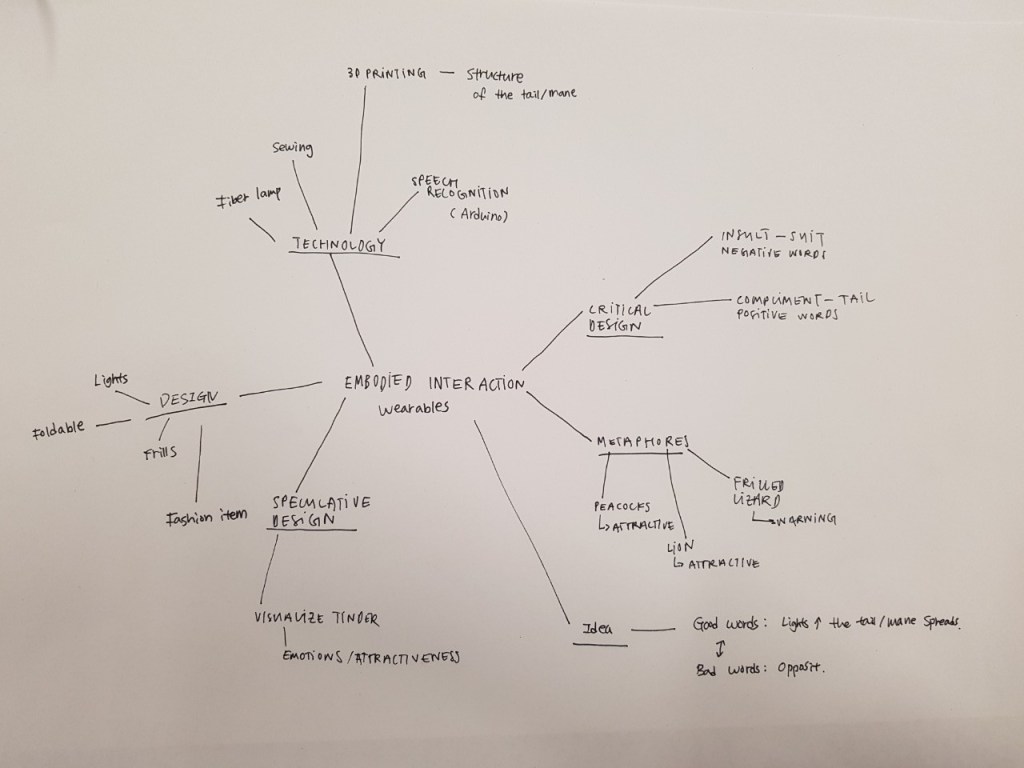
From our interest, I could meet Dominik and Fiona as the group members. I never worked with Fiona before, so I think this would be a good opportunity for me to get to know each other better. Also, it would be interesting to see how English and German can merge together into the group conversation – We are using online dictionaries a lot to deliver our ideas. I volunteered to keep the blog as I already started mine for the embodied interaction. (I was thinking about having an individual project, but I’d like to give it a try for the group project before my final BA.) Here are some materials that we had so far for the brainstorming.
About making the invisible visible
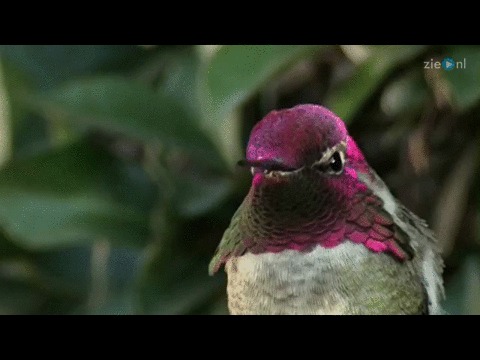
The humming bird, visualising its voice.
Human words and voices are not visible, but consist of crucial parts in communication. We first thought about detecting the words with an Arduino speech sensor but changed the direction to focus on the voice itself. What if we can visualise auras of our voice and see how the colours merge in our communications? Would it be a new way to see the harmony between different people?
Metaphors found in nature
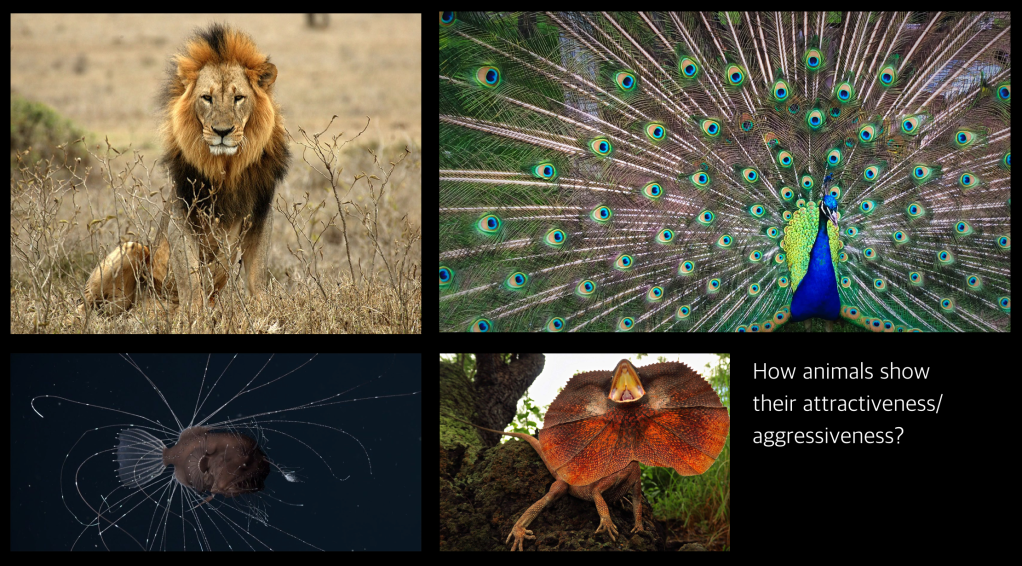
We found the metaphor in lion’s mane, peacock’s tail and tentacles of jellyfish. That’s because those parts are which the animals show their attractiveness distinctively to others. What if we can use this metaphor as well in our project, that one’s voice can show the unique attractiveness of as an individual? Would there be a possibility to figure out how we can create harmony with our uniqueness?
Related projects


Regarding the related projects and fabrication ideas, we could find the previous projects done by the ZHdK students last year. Also, we gathered the insights of how we could go further with the research regarding the lights and other material, especially featuring the metaphors from nature.
The sensors and data

After much thoughts, we tried to do the research about the sensors and how could we collect the data from it. The sensors of Arduino could collect several data points from the human voice, such as voice tone, pitch, range and so on. we’d like to map this data with the colours of lights and see how it would be possible to implement in our project.

 Embodied Interaction
